
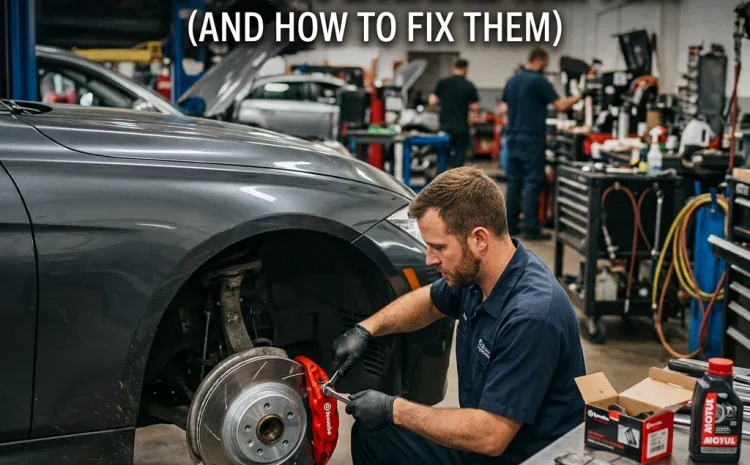
7 Mistakes You’re Making with Your Brake Repair (And How to Fix Them)
If you’ve ever driven down the winding hills of White Hall toward Fairmont on a rainy Tuesday, you know that feeling in your gut when you press the brake pedal and things don’t feel quite right. Maybe there’s a slight shimmy in the steering wheel, or perhaps a high-pitched squeal that echoes off the trees as you navigate those steep Marion County grades.
In West Virginia, our brakes work harder than in almost any other part of the country. Between the salt on the winter roads and the constant elevation changes, your braking system is your vehicle’s most critical safety feature. However, many drivers: and even some well-meaning DIYers: fall into common traps when it comes to Brake Repair.
At Winston Wheels & Tires, we see these mistakes every day. While we love a good weekend project, your safety is non-negotiable. Here are the seven most common mistakes people make with their Brake Repair and, more importantly, how to fix them so you can drive with confidence.
1. Not Cleaning the Brake Slides and Hardware
One of the most overlooked steps in a Brake Repair is the “prep work.” Many people simply pop off the old Brake Pads and slide the new ones in.
The Problem: Over time, the metal clips (hardware) and the channels where the pads sit collect brake dust, road salt, and rust. This debris acts like glue.
The Consequence: When the pads can’t slide freely, they stay in constant contact with the Rotors. This leads to overheating, “brake drag,” and pads that wear out in half the time they should.
The Solution: Use a dedicated brake cleaner and a stiff wire brush to scrub the caliper bracket until it’s smooth. If your new pads came with new stainless steel hardware, use it! If not, make sure the old clips are spotless before they go back on.

2. Failing to Lubricate Caliper Guide Pins
If you’ve noticed your car pulling to one side when you brake on I-79, your guide pins might be the culprit.
The Problem: Calipers are “floating” systems. They rely on small metal pins to move back and forth smoothly. Many people forget to pull these pins out, clean them, and re-grease them during a Brake Repair.
The Consequence: If these pins seize up due to lack of lubrication, the caliper can’t apply even pressure. This results in uneven pad wear and significantly reduced stopping power: a dangerous scenario when you’re heading down a steep hill.
The Solution: Remove the guide pins, wipe away the old, crusty grease, and apply a high-quality, high-temperature silicone brake lubricant. Never use chassis grease or WD-40; these will damage the rubber boots and cause the pins to seize even faster.
3. Letting the Caliper Hang by the Brake Hose
We see this one all the time in driveway repairs. When the caliper is removed to get to the Rotors, it’s often left dangling by the flexible rubber brake hose.
The Problem: The caliper is heavy. The brake hose is a reinforced rubber line designed to hold fluid pressure, not the weight of a heavy metal casting.
The Consequence: Hanging the caliper stretches the internal lining of the hose. This can cause “invisible” damage where the hose collapses internally, acting like a one-way valve that locks your brakes up, or worse, leads to a total hose failure while driving.
The Solution: Use a simple S-hook, a piece of heavy-duty wire, or even a zip tie to hang the caliper from the coil spring or frame. This keeps the tension off the hose and keeps your Brake Repair safe.
4. Skipping the Bedding-In Process
You’ve finished the job, the wheels are back on, and you’re ready to go. But wait: how you drive the first five miles is just as important as the repair itself.
The Problem: New Brake Pads and Rotors need to be “mated” together. This is a process called “bedding-in.”
The Consequence: If you immediately go out and slam on the brakes, you can cause “glazing” on the pads or uneven material transfer to the Rotors. This leads to that annoying brake squeal and a pedal that feels “mushy.”
The Solution: Find a safe, quiet road in White Hall and perform a series of controlled stops. Accelerate to 45 mph and brake moderately down to 10 mph. Repeat this 4-5 times without coming to a complete stop (to prevent hot spots). This creates a uniform layer of friction material on the rotor surface.

5. Ignoring the Condition of the Rotors
It’s tempting to save a few dollars by just throwing “slaps” (new pads) onto old Rotors.
The Problem: Rotors aren’t just pieces of metal; they are heat sinks. Over time, they develop “runout” (warping) or thin out beyond safe limits.
The Consequence: Thin Rotors cannot dissipate the heat generated by West Virginia mountain driving. This leads to “brake fade,” where your pedal goes to the floor but the car doesn’t stop. You may also experience a violent shaking in the steering wheel.
The Solution: Always have your Rotors measured with a micrometer. If they are above the minimum thickness and aren’t warped, they might be able to be “turned” (resurfaced). However, with modern vehicles, the best practice for a reliable Brake Repair is usually to replace the Rotors along with the pads. Learn more about our full-service auto care.
6. Using Low-Quality, Budget Brake Pads
When searching for “brake repair near me,” you’ll find plenty of shops offering “budget” specials.
The Problem: Not all Brake Pads are created equal. Cheap pads often use inferior friction materials that create excessive dust and noise.
The Consequence: Cheap pads are more prone to overheating. On a long descent down a local mountain road, these pads can literally begin to smoke and lose their ability to grip the rotor.
The Solution: Invest in Ceramic or high-quality Semi-Metallic pads. They offer better thermal stability, shorter stopping distances, and longer life. At Winston Wheels & Tires, we prioritize reliability over the lowest price because we know who is riding in your backseat.
7. Forgetting the Brake Fluid
The fluid in your lines is just as important as the pads on your wheels.
The Problem: Brake Fluid is hygroscopic, meaning it absorbs moisture from the air.
The Consequence: Moisture in the lines lowers the boiling point of the fluid. In heavy braking situations, that moisture can turn to steam, causing your brakes to fail entirely. Moisture also rusts the internal components of your ABS system, leading to thousands of dollars in repairs later.
The Solution: Check your fluid color. If it looks like dark tea or maple syrup instead of clear or light yellow, it’s time for a flush. We recommend a professional Brake Fluid exchange every two years to ensure your system stays corrosion-free.
A Practical At-Home Tip: The “Visual & Scent” Test
You don’t need to be a mechanic to stay ahead of brake issues. Once a month, take a quick peek through your wheel spokes with a flashlight. You should see at least a quarter-inch of pad material. Also, after a normal drive home, take a quick sniff near your front wheels. If you smell something like “burning carpet,” your brakes are sticking or overheating. This is a sign to search for brake repair near me immediately.

Why Precision Matters in White Hall
Proper braking is closely tied to your vehicle’s overall geometry. If your car is pulling or wearing brakes unevenly, it might not just be the calipers; it could be your alignment. Check out our guide on why precise wheel alignment is critical for West Virginia mountain roads to see how these systems work together.
Trust Your Neighbors at Winston Wheels & Tires
At the end of the day, a Brake Repair isn’t just about parts and labor: it’s about the peace of mind that comes from knowing your car will stop exactly when you need it to. Whether you’re commuting to Morgantown or just running errands around White Hall, you deserve a vehicle that responds predictably to every turn and stop.
If you’ve noticed a squeak, a shudder, or a soft pedal, don’t wait for the “consequence” phase of the problem. Stop by Winston Wheels & Tires today. We’re not just your mechanics; we’re your neighbors, and we’re committed to keeping our community safe, one stop at a time.